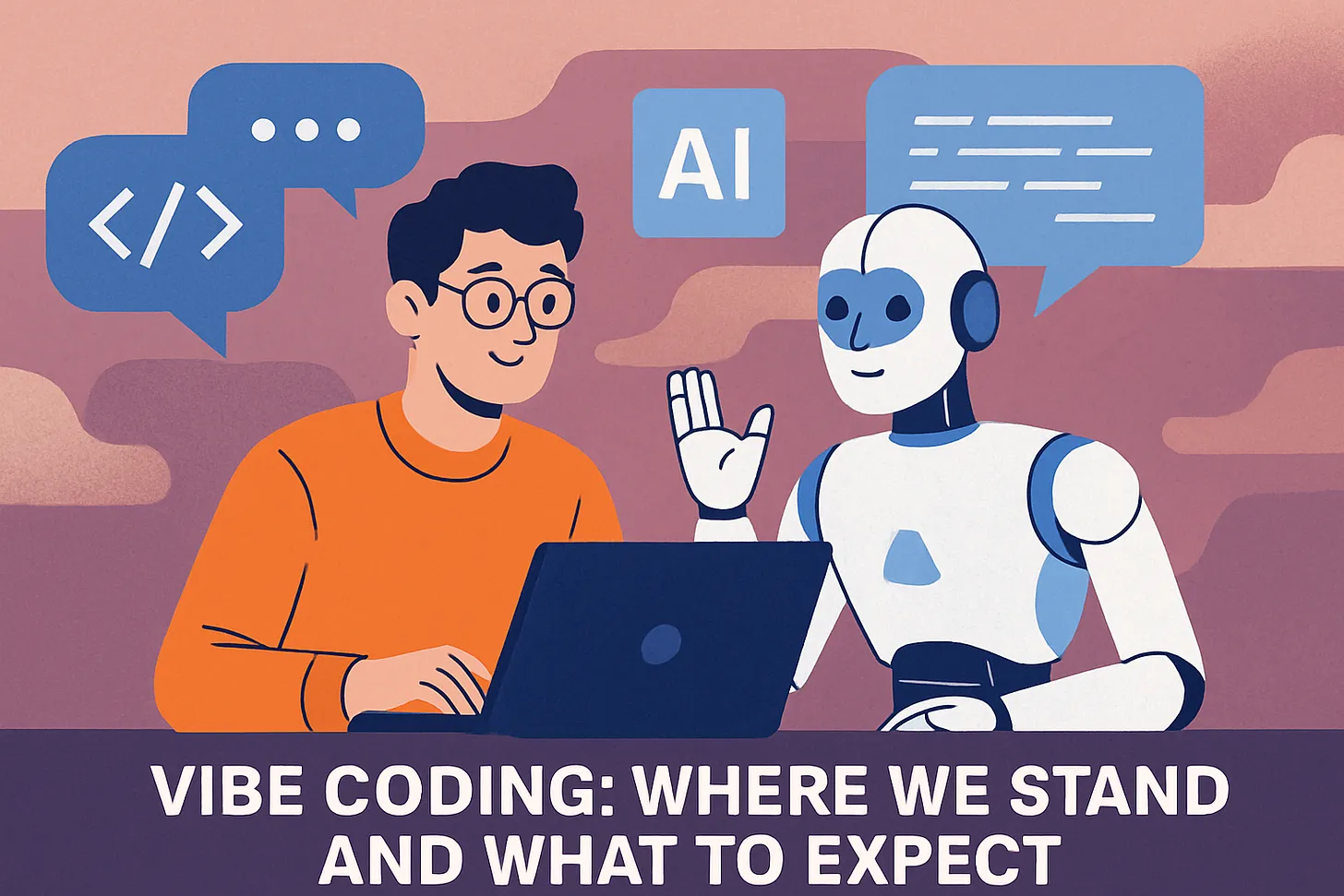
There is a new and innovative paradigm in software development called Vibe Coding. It goes beyond just tools or steps. It is a creative partnership between developers and AI that turns coding into a productive experience.
Imagine teams where people feel safe to experiment and powerful AI helpers, such as large language models (LLMs), work alongside humans almost as teammates. That’s the vibe we are talking about.
Vibe coding is making the entire software development process smoother and more energizing. It’s happening fast, as a recent Stack Overflow 2025 survey shows that 84% of respondents use or plan to use AI tools in their development process.
This article delves into vibe coding, exploring its fundamentals and human-LLM collaboration within the SDLC. You will also learn about implementing vibe coding, its limitations, and the exciting future where humans and AI collaborate to build better software.
The Fundamentals of Vibe Coding
Vibe coding signifies a significant shift in the software development process. It shifts the focus from “how to code” to “what to code.” Let’s examine the fundamental principles that drive this evolution.
Defining Vibe Coding
Vibe coding is an AI-assisted software development method that produces working code from natural language prompts. Users describe their software features using plain language, and the AI converts it into executable code.
The term “vibe” relates to flow state, which represents a psychological state where developers deliver their best work without tracking time. Vibe coding builds environments where:
- Psychological safety drives creativity, as teams feel confident to try new things without fear of making mistakes.
- LLMs function as intuitive partners instead of just tools.
- Collective momentum replaces isolated workflows.
Simply put, vibe coding enables “intent-to-code” workflows, where developers describe what they want to accomplish, rather than how to implement it. This transforms development from syntax-focused implementation to problem definition and solution design, which also compresses feedback loops from days to hours.
Tools Powering the Vibe
Vibe coding is bringing a new wave of AI-powered tools for developers to facilitate the various stages of the software development lifecycle.
1. AI Pair Programmers
These tools act as intelligent coding partners for developers. They provide context-aware code suggestions, auto-complete complex code snippets, generate tests, and help refactor code for better maintainability.
These tools accelerate development, automate repetitive tasks, and improve code quality with their real-time assistance. Popular tools include GitHub Copilot, Amazon CodeWhisperer, Tabnine, and many more.
2. Voice-First Development
These tools enable developers to write and debug code using natural language voice commands. These hands-free interactions provide enhanced accessibility, accelerating development with reduced physical strain.
Notable voice-first IDEs and interfaces include Dragon Naturally Speaking for coding, Vocola scripting for voice commands in IDEs, and Relpit Voice for AI-driven assistance.
3. Live Collaboration
These tools enable synchronized, real-time coding sessions with AI assistance. They allow teams at different locations to collaborate effectively. These tools incorporate AI-driven code reviews, instant suggestions, and contextual problem-solving, which enhances team alignment and shortens review cycles.
Some popular live collaboration platforms include Visual Studio Live Share, Tuple, Floobits, and more.
The Basics of Prompt Engineering
Vibe coding searches have increased by 6700% over the last few months. As AI collaboration becomes the new norm, mastering the art of “prompt engineering” is essential. Think of it as the art of guiding AI outputs through structured communication.
The key elements of prompt engineering include:
- Clarity and Context: Use clear prompts with relevant background to help AI understand the exact environment and avoid confusion.
- Goal-Oriented Instructions: Focus on what to achieve, not how to achieve it, so that you give the AI room to be creative and solve the problem.
- Examples and Patterns: Provide examples or follow the provided templates to enhance AI accuracy and consistency.
- Iterative Refinement: Treat prompt writing as a cycle, i.e., test, adjust, and improve prompts based on AI responses.
- Avoiding Anti-Patterns: Refrain from using vague or complex prompts. Always verify AI output and build prompts with safety and correctness in mind.
Examples of some excellent prompts are as follows:
- “Acting as a senior JavaScript engineer, rewrite this API endpoint to improve error handling and ensure it returns standardized JSON error responses with appropriate HTTP status codes. The service runs on Node.js 16 using Express.js. Current code: [code block]”
- “Acting as an experienced SQL developer, optimize this database query to reduce execution time by at least 30% without changing the result set. The query runs on PostgreSQL 13 and currently experiences slow performance on large datasets. Here’s the query: [query text]”
In short, developers need to level up their prompt engineering skills to harness AI efficiently and ensure that every prompt they type translates into contextually accurate code outputs.
Team Dynamics in High-Vibe Environments (Psychological Safety and Creativity)
High-performing vibe coding teams build an environment of psychological safety where members feel secure experimenting and asking questions without fear of judgment.
AI-assisted development alters traditional team dynamics:
- Reduced Fear of Failure: Developers can rely on AI for routine tasks and debugging support, which reduces hesitation to experiment.
- Non-Judgmental Feedback from AI: AI assistants respond without emotional bias, which encourages open exploration of ideas and iterative design changes.
- Collaboration Enhancement: AI mediates between teammates and articulates best practices, which makes interactions more efficient and knowledge more transferable.
In contrast, there are risks associated with over-reliance on AI, as it can stifle critical thinking and promote dependency. However, the most innovative teams strike a balance and encourage continuous skill development alongside the use of AI tools.
Tactics to Measure and Maintain the Vibe
AI-powered development requires new metrics to measure productivity. It involves both qualitative and quantitative approaches.
The qualitative metrics include:
- Developer satisfaction
- Flow state frequency (uninterrupted productive work)
- Learning velocity of acquiring new skills and knowledge
- Creative output
The quantitative metrics include:
- Time-to-first code
- Context switch frequency
- Error resolution speed
- Feature delivery pace
Overall, the key to effectively measuring and maintaining the vibe involves a balanced scorecard that combines multiple perspectives. It integrates business value delivery, technical quality, team health, and continuous learning to provide a comprehensive view of both developer experience and software outcomes.
Human–LLM Collaboration in the SDLC
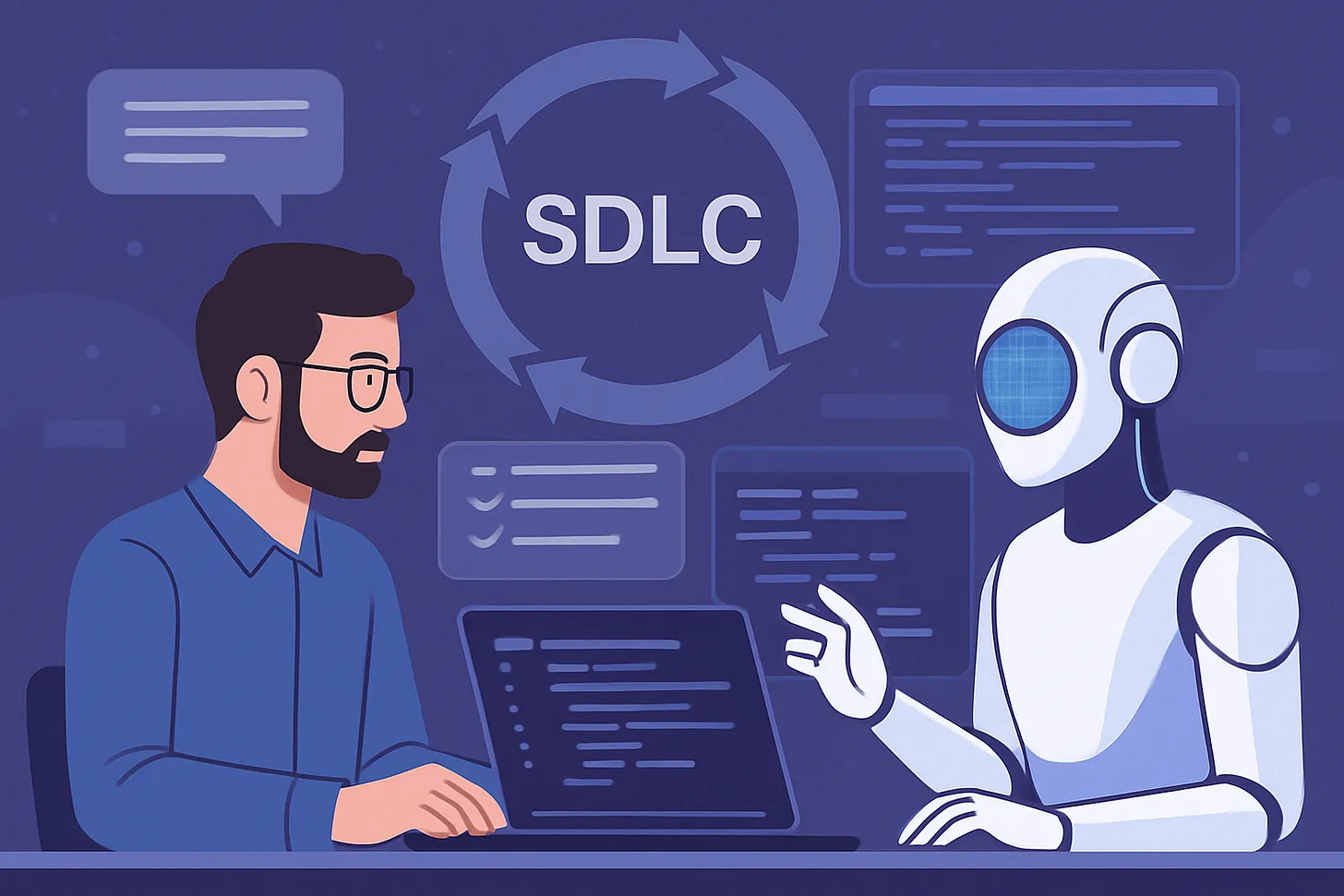
Human-LLM collaboration is reshaping the traditional Software Development Life Cycle (SDLC). The way developers work, collaborate, and produce software is becoming a lot smarter and faster.
The collaboration is beyond autocomplete or coding aides. It is forming a true partnership between humans and AI that accelerates delivery with enhanced code quality.
From Copilot to Pair
The journey of AI-assisted programming began with intelligent autocomplete tools, such as GitHub Copilot, which offered context-aware code completions and suggestions. However, the role of AI has now evolved to being an active pair programmer or collaborator. AI now:
- Engages in dialogues about design choices and trade-offs.
- Proposes multiple solutions along with explanations.
- Generates comprehensive tests and documentation.
- Assists with debugging and refactoring in real time.
This transformation forms a human–AI “pair programming” dynamic, where developers work alongside AI “peers” who contribute creatively and iteratively.
Intent-to-Code Workflows
A defining feature of human–LLM collaboration within the SDLC is the shift from creating explicit code to communicating intent. Developers no longer write every line in detail but express what they want the software to do in natural language. Large Language Models (LLMs) then interpret this intent and generate a functional code.
This collaboration involves several key stages:
- Natural Language Intent Capture: Developers convey feature requests, bug fixes, or design goals naturally. They don’t worry about boilerplate or syntax specifics.
- AI Specification Generation: The LLM processes these high-level intents and translates them into precise technical specifications. It even fills in gaps or suggests best practices.
- Code Synthesis: LLM uses the generated specs to produce working code modules or components.
- Iterative Refinement: Developers and AI engage in interactive feedback loops, where the AI adapts the code based on clarifications or optimization requests.
Overall, the intent-to-code model compresses development cycles, allowing developers to focus on high-level problem-solving and creative innovation.
Review-then-Refactor Loop
Code quality and correctness remain a shared responsibility between humans and LLMs; however, the processes differ from those used for human-written code. AI-generated code follows a structured review-refactor cycle to maintain high standards throughout the SDLC:
- Code Review: Developers evaluate AI outputs for accuracy, compliance with requirements, security, and maintainability. They also validate AI’s assumptions and contextual relevance.
- Automated Verification: Test suites, static analysis, security tools, and performance benchmarks verify code reliability.
- Refactoring Partnership: AI efficiently handles routine code cleanup tasks, including variable renaming, restructuring, and optimization. In contrast, humans oversee complex architectural changes and design enhancements.
- Trust Building: Over time, iterative review and refactoring lead to calibrated trust, which allows teams to delegate routine modifications to AI.
This ongoing collaboration between humans and AI strikes a balance between speed and optimized code quality, as well as system integrity.
Knowledge Management
Knowledge management in the SDLC is also undergoing a transformative shift. AI is now helping teams create, access, and maintain knowledge.
- Self-Documenting Code: AI generates up-to-date API documentation, user guides, and architectural diagrams from code and specifications.
- Living Documentation: Documentation evolves in tandem with code and automatically updates with changes.
- Institutional Knowledge Capture: AI indexes design rationales, discussions, workarounds, and historical decisions, capturing the collective knowledge of an organization. It makes them searchable and available to new team members.
- Accelerated Onboarding: New hires utilize AI knowledge bases and context-aware assistants to onboard more quickly and contribute sooner.
In short, an AI-managed knowledge ecosystem minimizes human overhead and promotes continuous learning and consistency.
Skills & Roles
Human–LLM collaboration also requires evolving skills and new roles within software teams:
- Prompt Engineers: Specialists who master writing effective AI prompts, understanding AI capabilities/limitations, and optimizing AI responses for high-quality code generation.
- AI Librarians: Custodians responsible for selecting, managing, securing, and evolving AI tools and models to fit organizational needs.
- Continuous Learners: Every developer needs to adapt to working alongside AI. They must sharpen skills in intent articulation, AI oversight, and integrating AI outputs effectively.
- Evolving Focus: Traditional coding skills are shifting towards problem definition, system design, critical evaluation, and creative problem-solving. In contrast, routine coding and boilerplate writing are increasingly being driven by AI.
The role evolution is making the human-AI partnership strong, with developers amplifying their impact through AI support.
How to Implement Vibe Coding?
Until now, we have learned the fundamentals of vibe coding and the emerging human-LLM collaboration. This now leads to the question of how to implement vibe coding.
Let’s walk you through your first coding experience with Vibe Coding. We will look into two examples. The first one is about generating code, while the second one builds a web application.
Example #1 Generating the Code for Developing an Expense Tracker
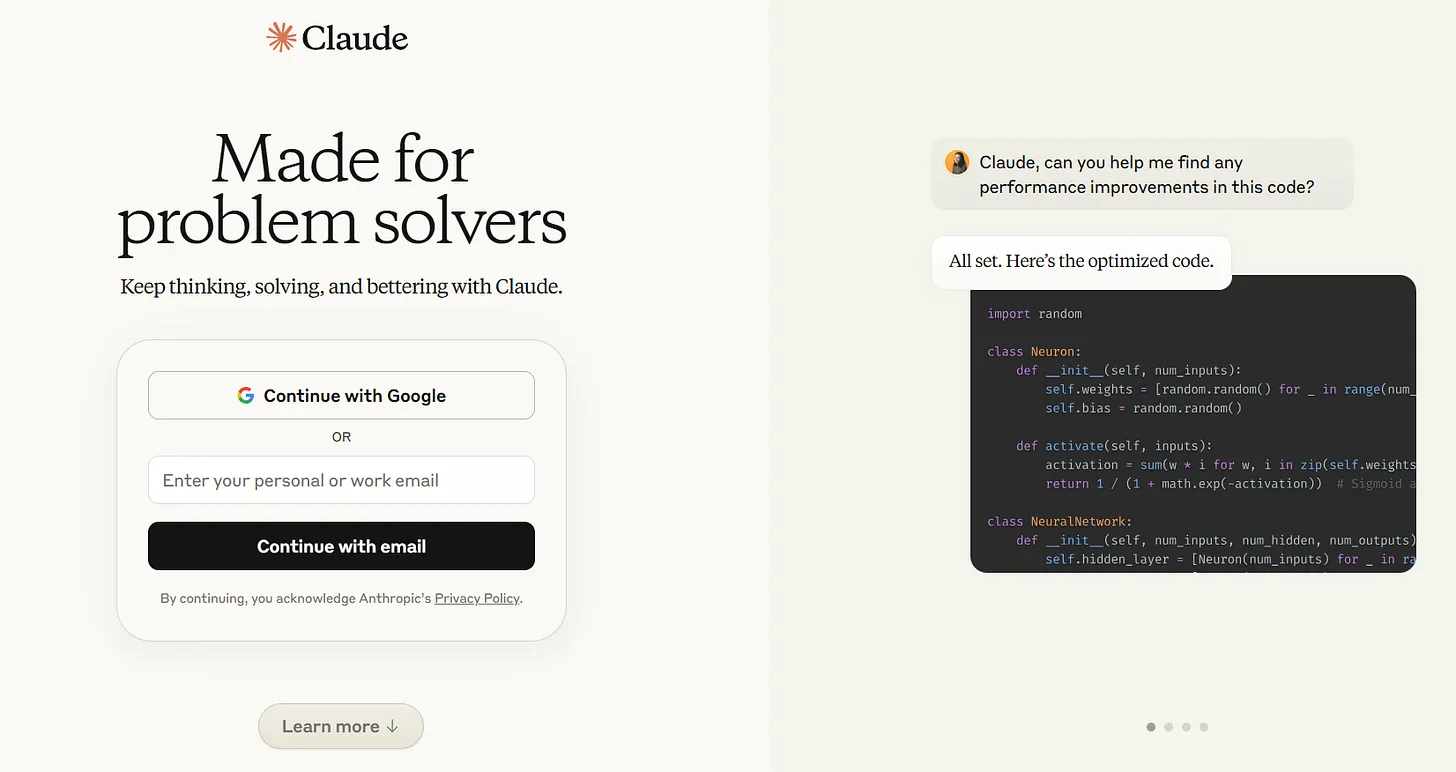
Step 1. Pick a Tool
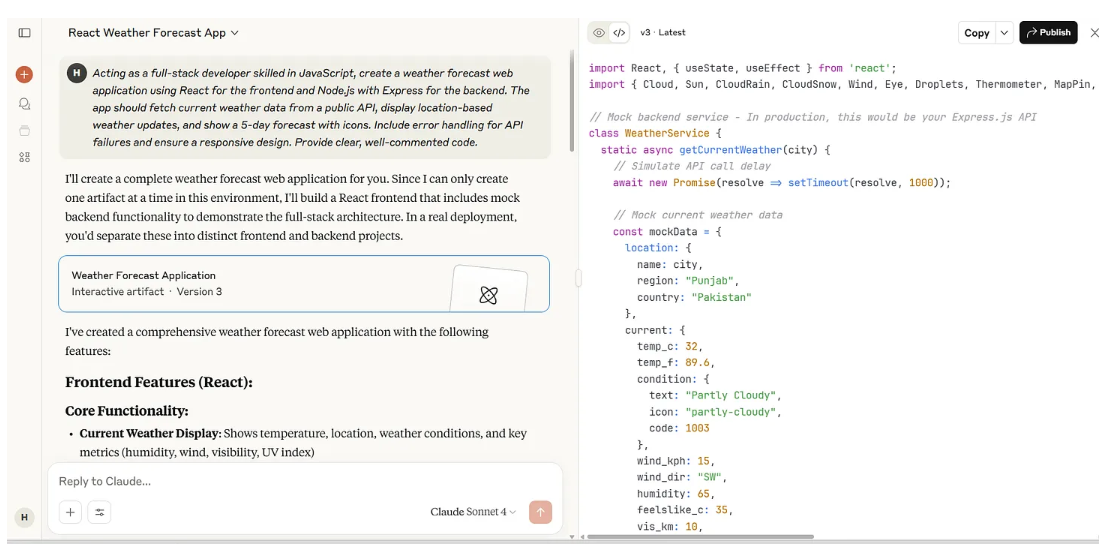
First things first, you need to choose the tool. There are dozens of browsers and desktop-based tools you can choose from. Currently, let’s consider Claude, which offers both browser and desktop-based experiences. So, create an account and start a new project.
Step 2. Write the Prompt
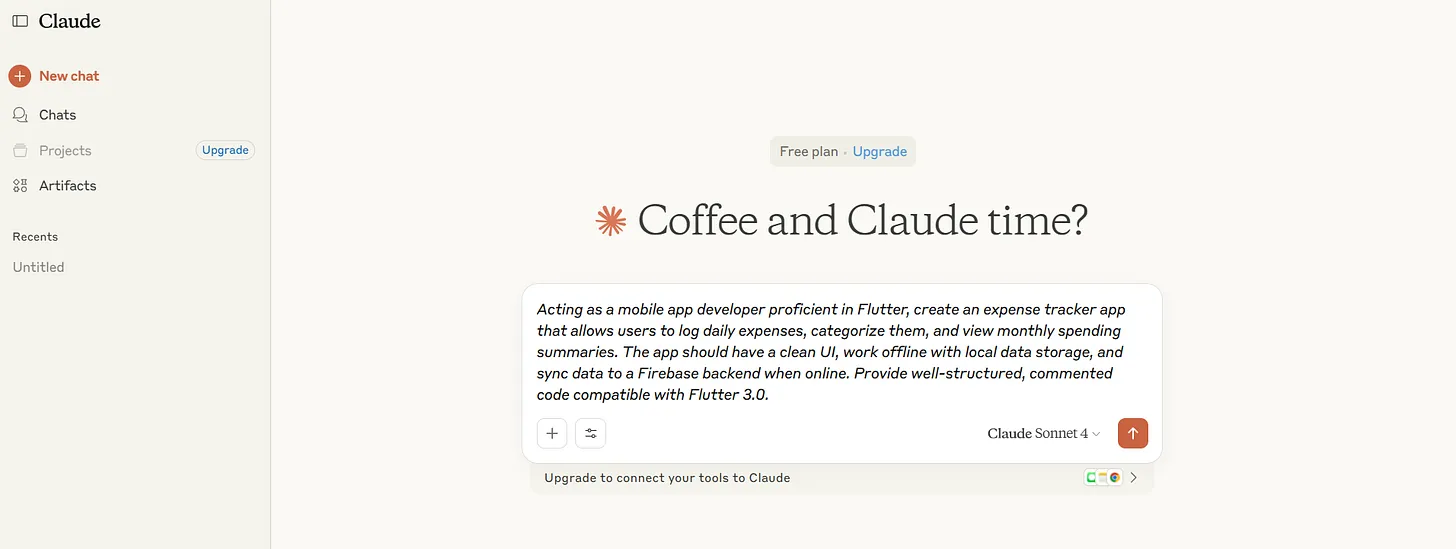
Enter the prompt about what code you want to generate. Let’s assume you want to create an expense tracker mobile app. Your prompt could be:
“Acting as a mobile app developer proficient in Flutter, create an expense tracker app that allows users to log daily expenses, categorize them, and view monthly spending summaries. The app should have a clean UI, work offline with local data storage, and sync data to a Firebase backend when online. Provide well-structured, commented code compatible with Flutter 3.0.”
Step 3. Preview and Optimize Code
Within seconds, Claude will generate the code for you. Afterward, review the code and ask for changes with follow-up prompts.
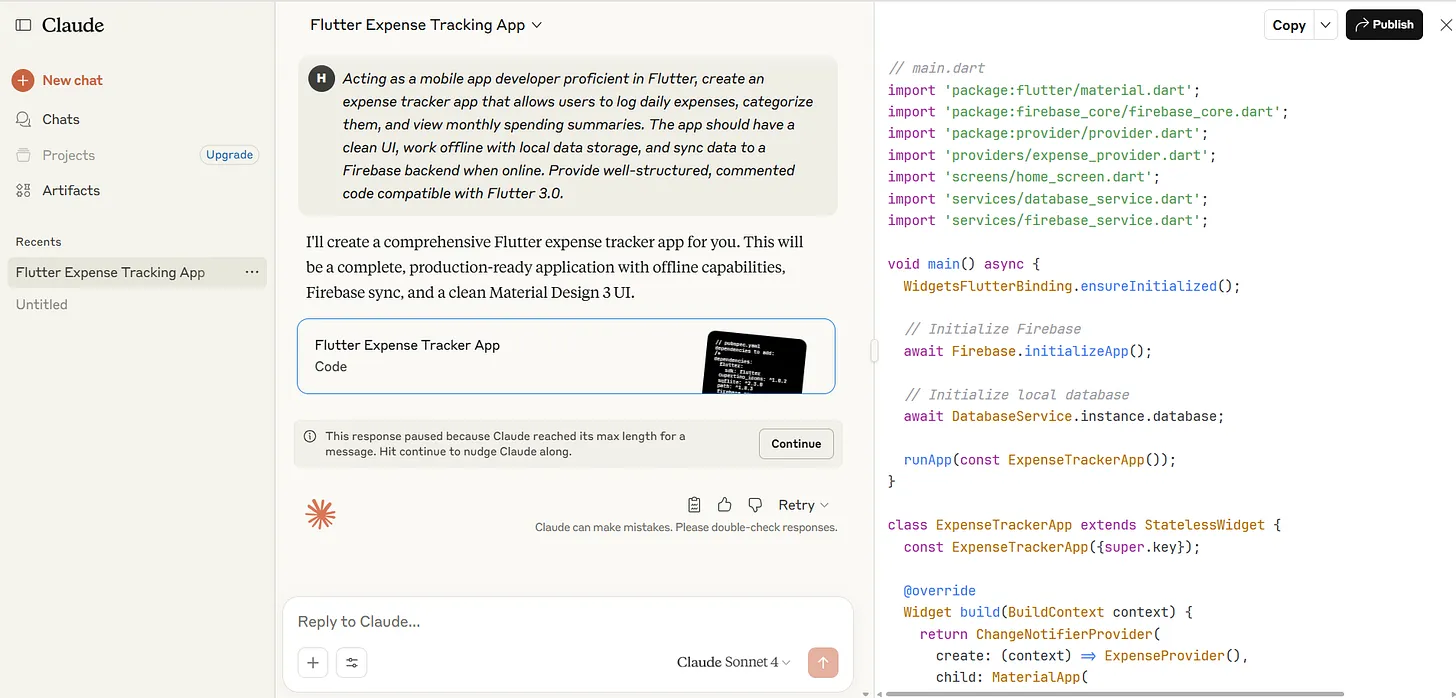
Within seconds, Claude will generate the code for you. Afterward, review the code and ask for changes with follow-up prompts.
Example #2: Building a Web App to Track Stock Price
Step 1. Pick a Tool
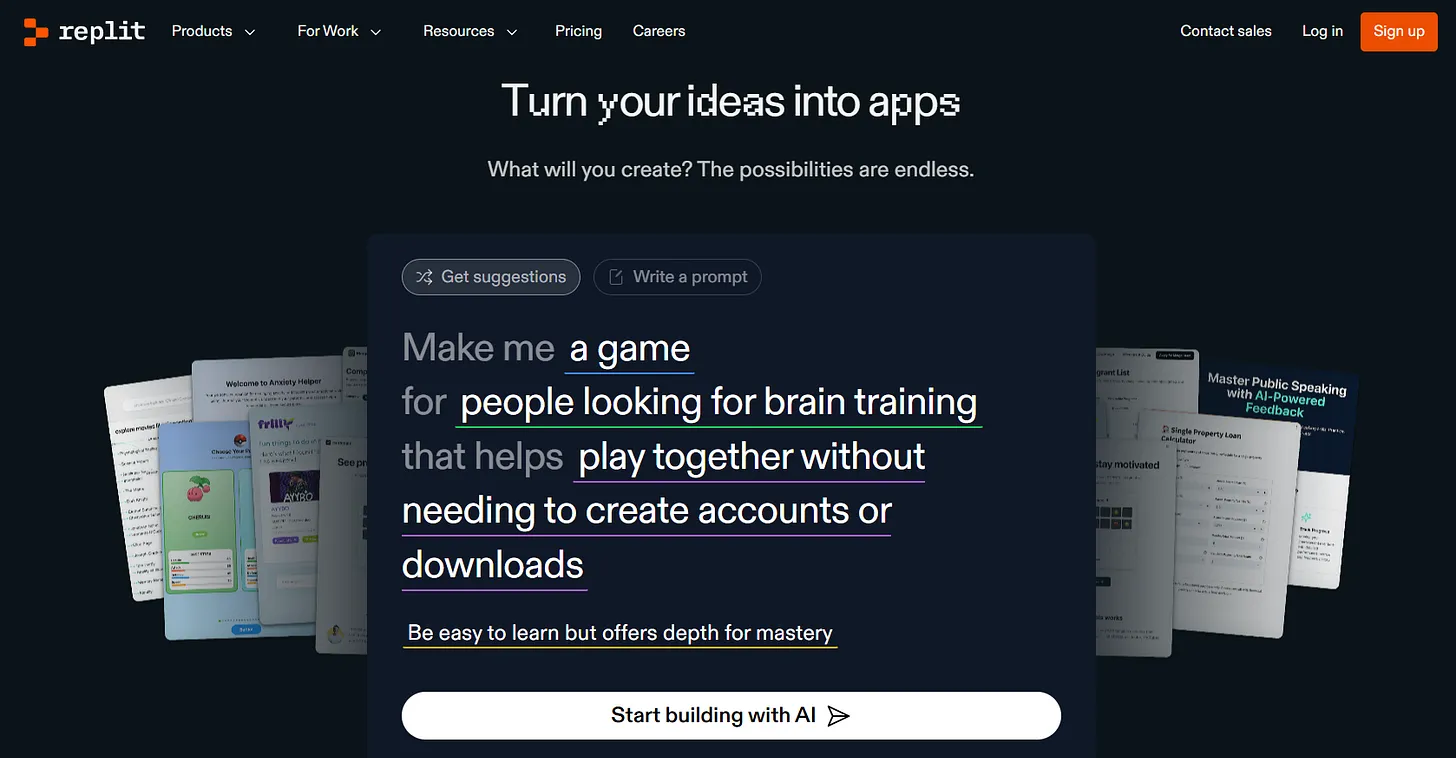
For this example, let’s consider Replit, a browser-based AI tool for creating applications. So, create an account and start a new project.
Step 2. Write the Prompt
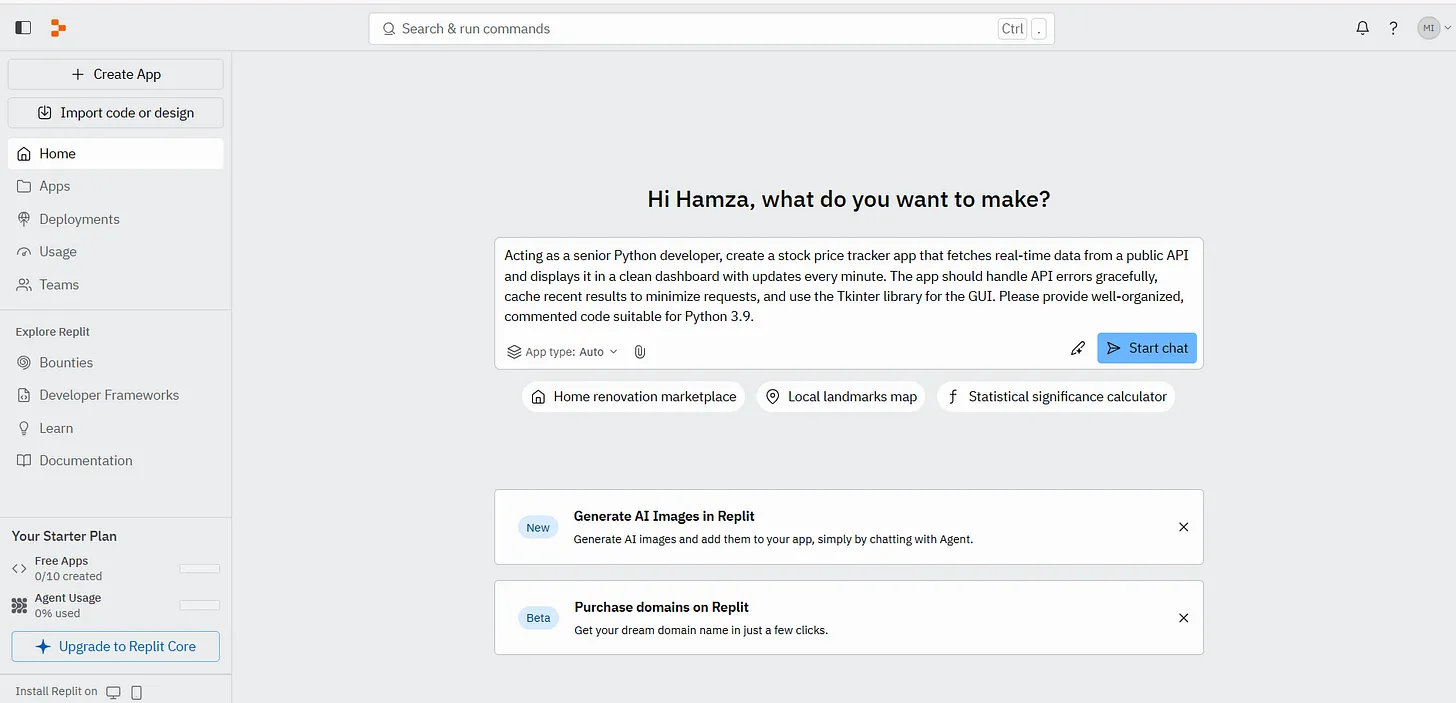
Once you are in the Replit main dashboard, write your first prompt about the software you want to generate. Let’s assume that you want to create a simple stock price tracker app. So, the prompt can look like:
“Acting as a senior Python developer, create a stock price tracker app that fetches real-time data from a public API and displays it in a clean dashboard with updates every minute. The app should handle API errors gracefully, cache recent results to minimize requests, and use the Tkinter library for the GUI. Please provide well-organized, commented code suitable for Python 3.9.”
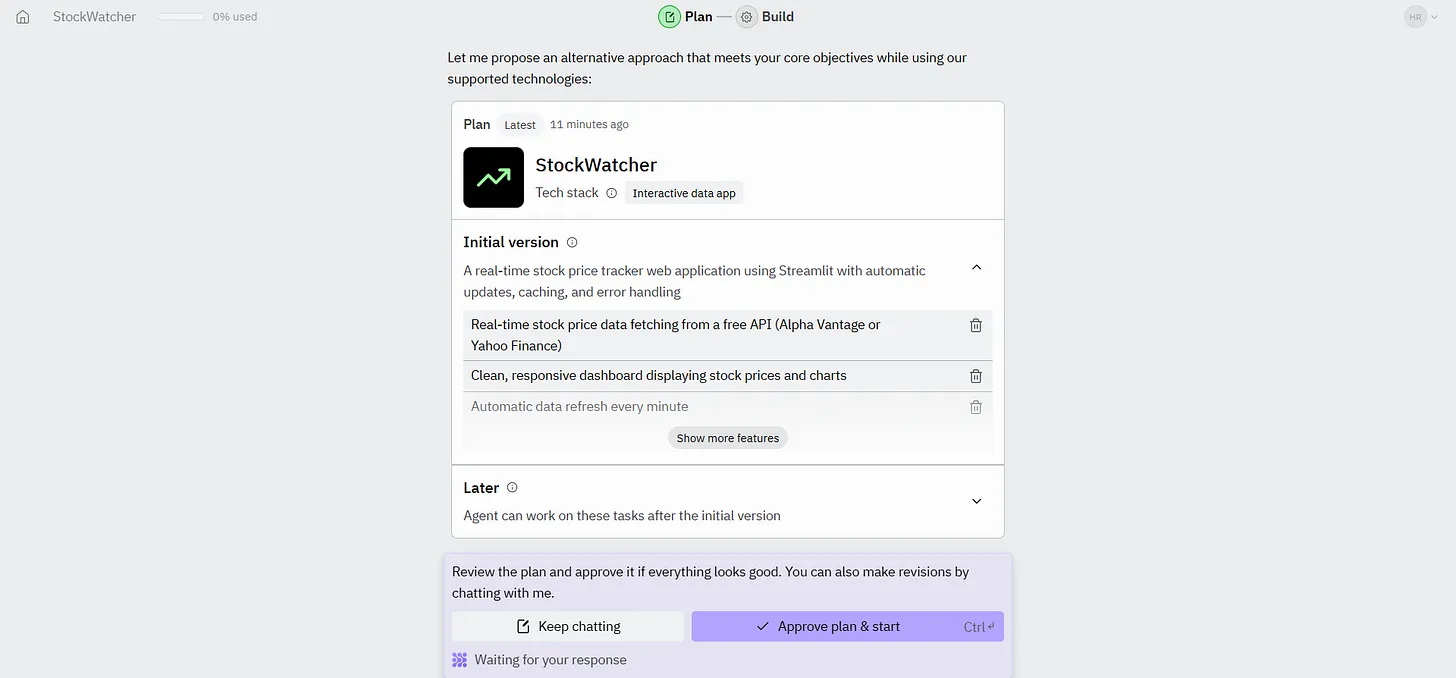
Step 3. Preview the Plan
Replit will provide a plan outlining the development scope. So, preview it and then click “Approve plan & start”.
Step 4. Test the App
Now, wait for the AI agent to develop the app for you. Once done, you can preview and run the app and test its various features. If you want changes, you can specify that in the following prompt and continue doing so until you get the perfect version.
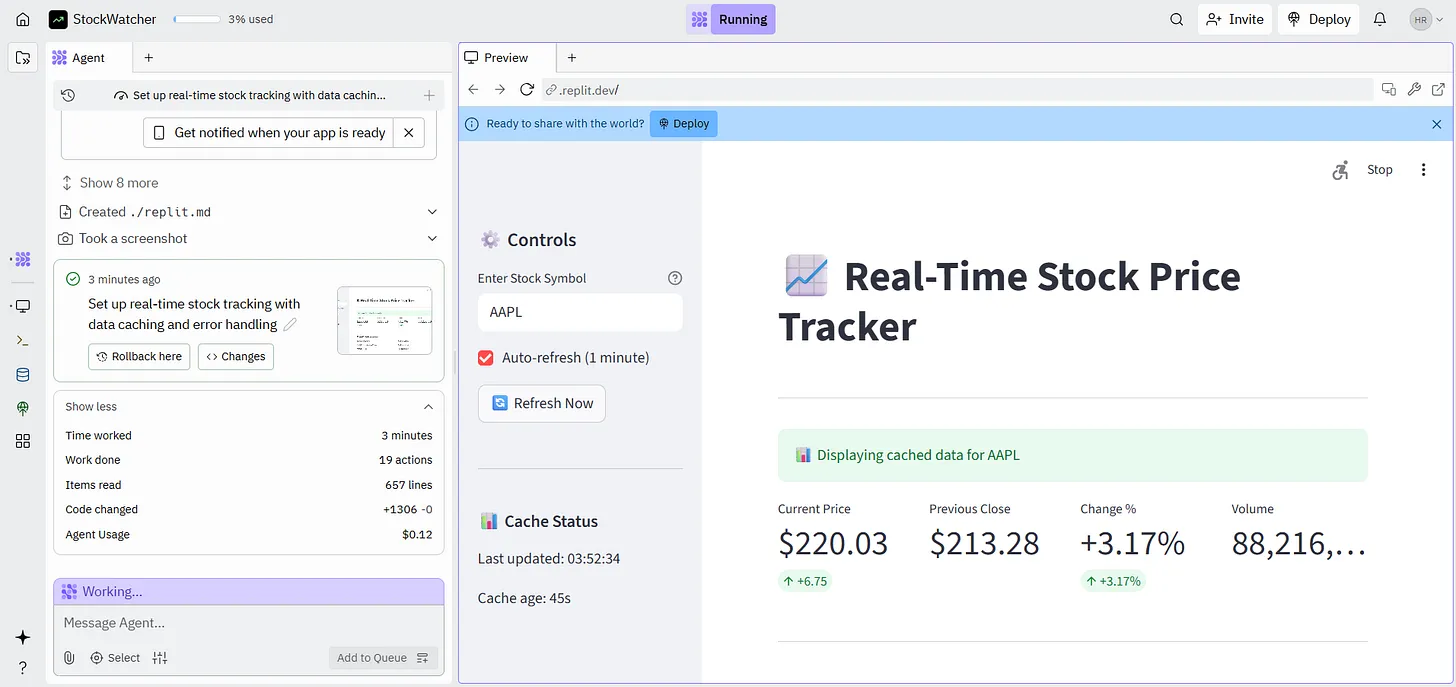
This way, you can develop software applications with an intelligent use of prompt-based vibe coding.
Limitations and Challenges of Vibe Coding
Vibe coding is bringing transformative benefits, but it is also presenting limitations and challenges that teams and organizations must navigate:
- Trust and Code Quality Risks: AI-generated code can introduce subtle bugs, security vulnerabilities, flawed assumptions, or other risks that escape immediate detection.
- Skills and Role Evolution: Vibe coding demands new skills, which pressure developers to adapt continuously. Teams must invest in ongoing learning and strike a balance between AI assistance and the retention of fundamental programming skills.
- Psychological and Team Dynamics: AI reduces the fear of failure, but over-reliance might hinder creativity and human-to-human mentorship.
- Governance Complexities: Fast-paced AI-driven code generation tests traditional governance models. Organizations encounter legal uncertainties in intellectual property, licensing compliance, and data privacy.
- Challenges of Debugging and Troubleshooting: AI-created code often features obscure or non-linear logic, which can increase the time and effort required for debugging.
- Traceability: AI-generated code often lacks clear intent or reasoning, making the decision-making process unclear. This absence of explicit context creates difficulties in understanding why specific patterns or libraries were selected.
- Over-reliance: Developers might depend too much on AI-generated code. It not only creates unintentional debt or bugs but also affects developers’ critical thinking and learning abilities.
Overall, the limitations and challenges with vibe coding are here, but most of them are avoidable with a strategic approach. For example, you can catch hidden bugs and vulnerabilities with rigorous code reviews and security audits.
Governance, Security, and Ethics in the Vibe Era
The vibe coding era is triggering a new era of governance, security, and ethics frameworks. The speed and scale of AI-generated code require innovative approaches for effective governance and security policy enforcement.
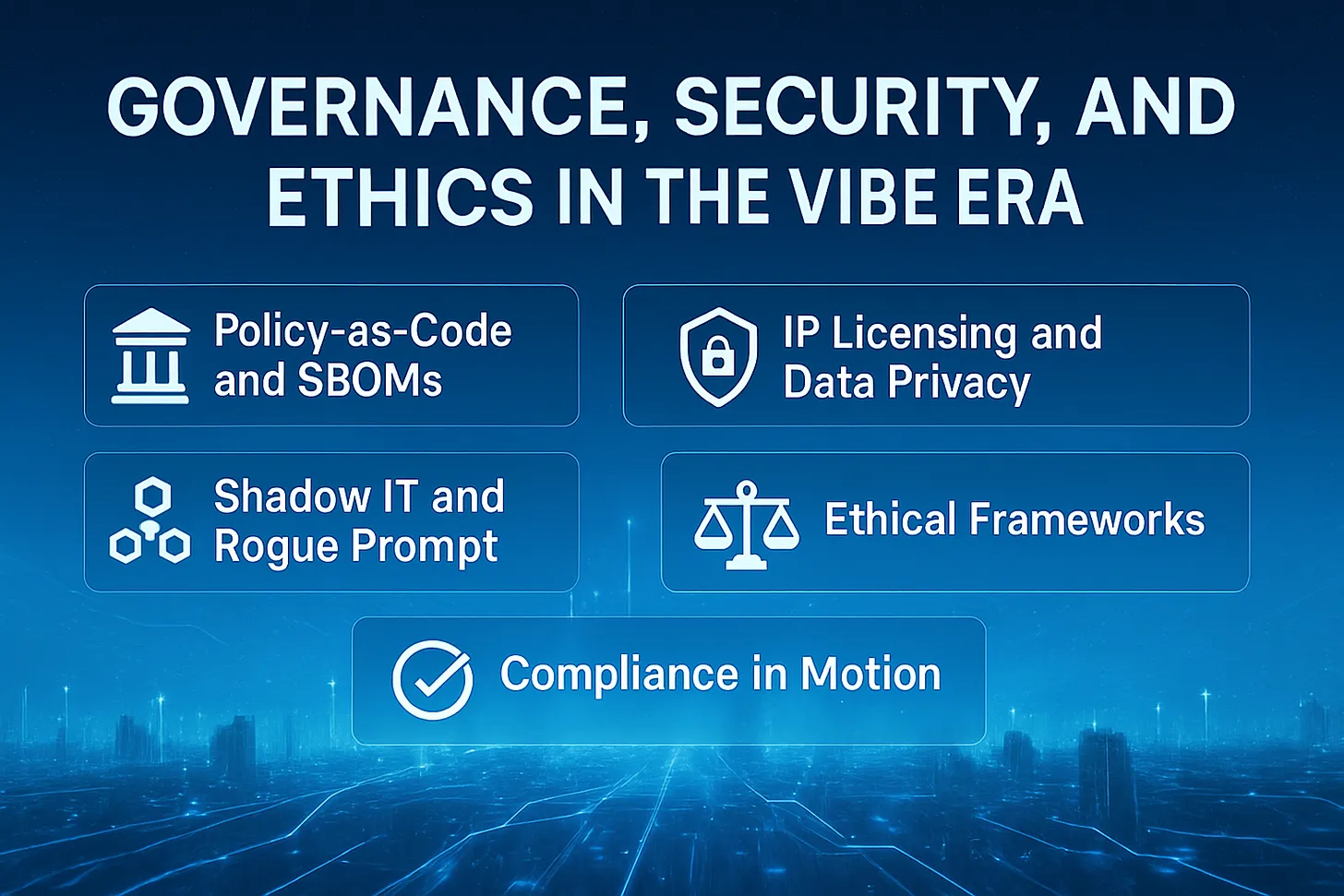
Policy-as-Code and SBOMs
Policy-as-Code becomes essential in AI-augmented SDLC. Rather than relying on slow and manual governance, policies are expressed as machine-readable and executable code that automatically enforces security and quality standards at every stage of the CI/CD pipeline. This enables real-time prevention of policy violations, such as deploying vulnerable or non-compliant code.
Furthermore, Software Bill of Materials (SBOMs) are becoming increasingly popular. They serve as detailed inventories listing all components and libraries or dependencies within the software. They offer essential visibility into supply chains, helping teams identify and manage vulnerabilities, licensing conflicts, and security risks in AI-generated or third-party code.
IP, Licensing, and Data Privacy
AI-generated code raises questions about intellectual property ownership and compliance with licensing requirements. Since AI models learn from vast, often copyrighted codebases, it’s unclear who owns the rights to AI-generated outputs and whether these constitute derivative works under existing licenses, such as the GPL and MIT.
Licensing compliance tools integrated into AI workflows help detect potential infringements early; however, they require continuous monitoring. There are also data privacy concerns related to AI’s training data, which may contain sensitive or proprietary information. This creates risks of unauthorized exposure or regulatory breaches.
Ethical Frameworks
The era of AI necessitates robust ethical frameworks to guide AI development and address biases and fairness in AI outcomes. Organizations often:
- Ensure inclusive training data that represents diverse demographics and technologies.
- Conduct robustness testing to uncover biased or harmful suggestions.
- Maintain explainability for AI decision-making, which enables developers and stakeholders to understand and trust the behavior of AI systems.
- Define clear responsibility and accountability structures for AI-assisted code.
- Reduce environmental impacts by evaluating the energy use and carbon footprint of AI development processes.
Overall, human oversight remains central to maintaining ethical standards and preventing unintended consequences.
Shadow IT and Rogue Prompt
Vibe coding is also fueling a rise in shadow IT and rogue AI practices, such as developers using unapproved AI tools or prompts without organizational oversight. This spread presents significant risks:
- Potential data leaks or exposure of sensitive information through uncontrolled AI interactions.
- Security vulnerabilities introduced by ungoverned tools.
- Lack of visibility into AI tool usage complicates compliance and auditability.
- Increased opportunity for supply chain attacks via compromised AI plugins or models.
Companies are addressing these threats by utilizing AI tool registries, approval procedures, and sandbox environments that strike a balance between innovation and control.
Compliance in Motion
Traditional software development is often associated with periodic manual audits; however, it cannot keep pace with the Rapid development cycles enabled by AI. There is a need for continuous compliance, where compliance checks and evidence gathering are automated and integrated directly into development pipelines:
- Real-time policy enforcement gates prevent the deployment of non-compliant code.
- Automated evidence collection and documentation streamline the audit process.
- Risk-based compliance approaches adjust controls based on the sensitivity and context of changes.
- Ongoing collaboration with regulators and industry groups encourages evolving standards that keep pace with innovation.
This shift ensures that quality and legal requirements are met without slowing down the flow of value delivery.
The Future of Vibe Coding (2026 and beyond)
The vibe era is just beginning. By 2030, it is expected that 25% of Y Combinator startups will use AI to generate most of their code, automating 80% of routine tasks and speeding up project completion by up to 55%.
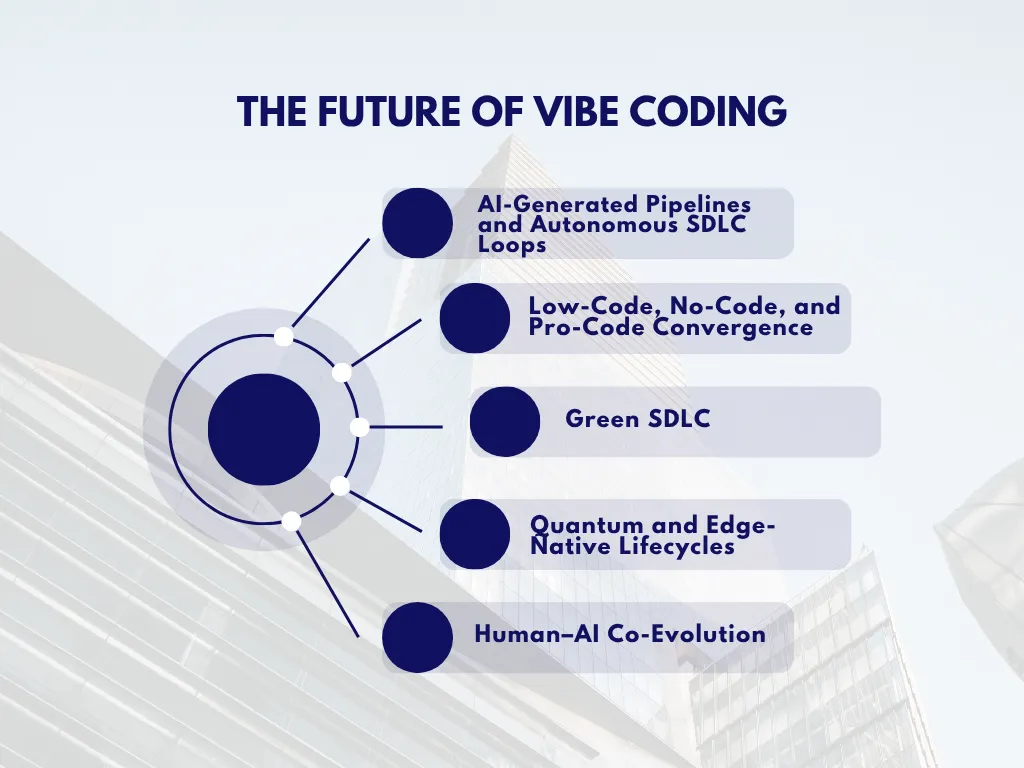
Some of the likely trends we will witness about vibe coding in 2026 and beyond include:
AI-Generated Pipelines and Autonomous SDLC Loops
AI will handle entire development workflows, encompassing requirements gathering, coding, testing, deployment, and monitoring. Developers will focus more on strategy, ethics, and oversight. This will speed up delivery and ensure safety.
Low-Code, No-Code, and Pro-Code Convergence
Development platforms will merge visual tools, natural language prompts, and traditional coding into unified interfaces. This convergence will empower non-developers and experts to collaborate and speed up innovation.
Green SDLC
Sustainability will become core to software lifecycles. Carbon-aware pipelines will optimize resource use and renewable energy timing. Tools will prioritize energy efficiency and carbon footprint reduction, making eco-friendly coding a standard practice.
Quantum and Edge-Native Lifecycles
Emerging tech like quantum and edge computing will create new development needs. These can be hybrid quantum-classical workflows and lightweight edge deployments optimized for latency and resource constraints.
Human–AI Co-Evolution
Humans and AI will grow together as partners. Both will learn and evolve their roles in a mutually beneficial way. AI will enhance human creativity and decision-making while humans will guide, refine, and govern AI.
Conclusion
Vibe coding reflects a new mindset that melds rapid experimentation and creative risk-taking with psychological safety within teams. It facilitates an environment where technical challenges become opportunities for innovation. The present and future look promising for the vibe era, as human-AI collaboration is set to accelerate creativity and transform software development.
For a complete guide to mastering modern software development, human–AI collaboration, and preparing your skills and teams for the future, explore my book on “The Vibe-Coded SDLC Evolution Disruption and What’s Next” and lead the next wave of innovation.